Disclosure: As an Amazon Associate, OfficialToddlerTech earns from qualifying purchases. This does not affect the price you pay.
Finding the best back to school headphones for kids is not just about sound. Parents usually need a pair that is comfortable enough for class, simple enough for a child to use on their own, and durable enough to survive backpacks, car rides, and daily handoffs. The right choice can also help avoid common frustrations like dead batteries, missing adapters, or headphones that are too bulky for a child’s head.
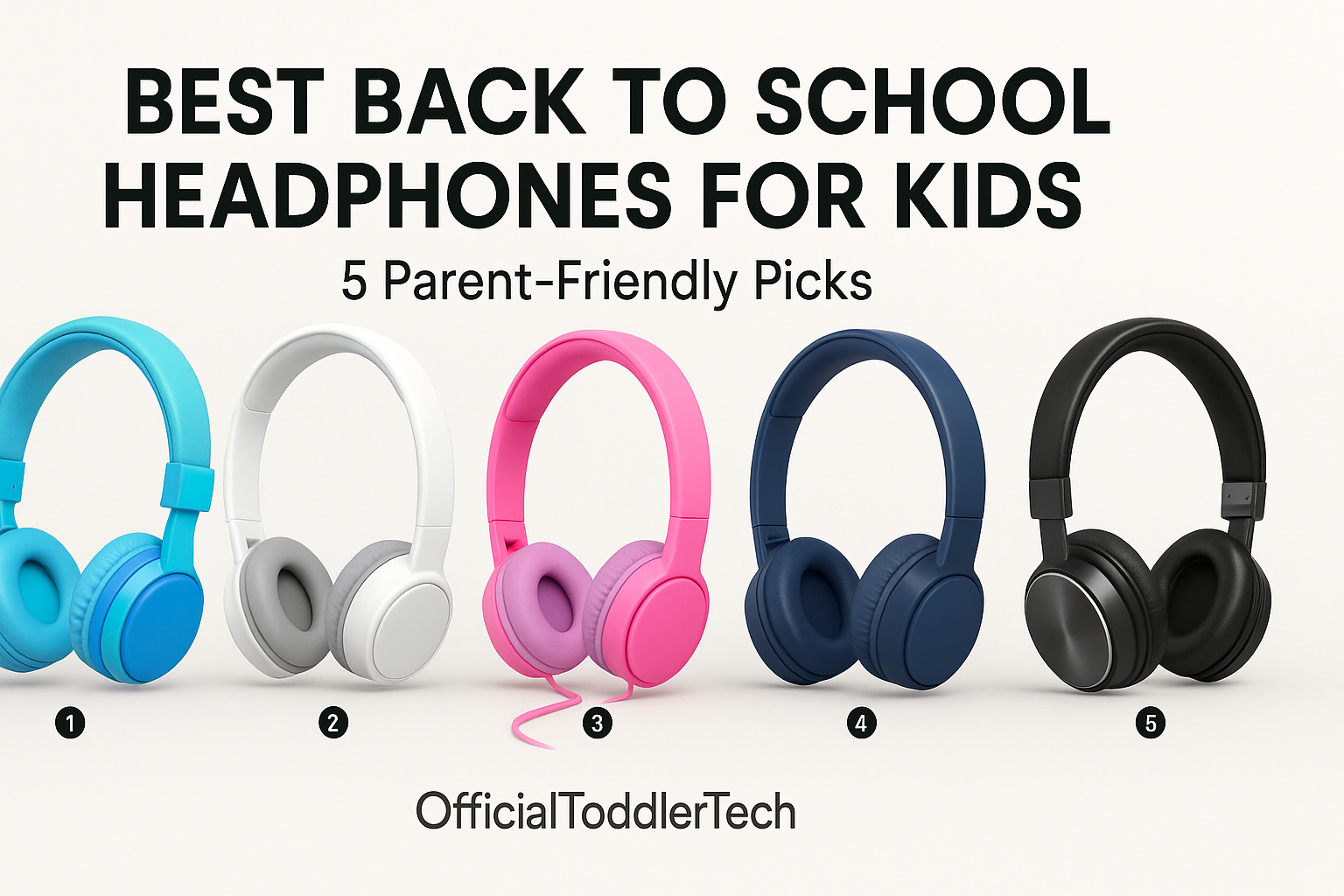
In this guide, we’re looking at five kid-focused options with different strengths: value, school use, wired simplicity, long battery life, and premium noise reduction. Each one may work well for a different kind of family, so the goal is not to crown one universal winner. Instead, this article should help you avoid buying the wrong pair for your child’s age, school setup, and listening habits.
Quick Picks
- Best Overall: Belkin SoundForm Mini Kids Wireless Headphones
- Best Value: iClever BTH12 Kids Bluetooth Headphones
- Best Budget Option: JLab JBuddies Studio 2 Wired Kids Headphones
- Best Wireless Option: JLab JBuddies Studio 2 Wireless Kids Headphones
- Best Premium Option: Puro Sound Labs PuroQuiet Plus Kids Headphones
Comparison Table
| Product | Best For | Age Range | Connection | Volume Feature | Notable Tradeoff |
|---|---|---|---|---|---|
| iClever BTH12 Kids Bluetooth Headphones | Best Value, Best for Long Trips | 4-14 | Bluetooth 5.2 | Selectable 74 dB and 85 dB modes | LED lights may distract in class |
| Belkin SoundForm Mini Kids Wireless Headphones | Best Overall, Best for School | 4-12 | Bluetooth 5.0 or 3.5 mm wired | 85 dB volume limit | Uses micro-USB charging |
| JLab JBuddies Studio 2 Wired Kids Headphones | Best Budget Option, Best Wired Headphones | 6-16 | Wired | 85 dB volume limit | Needs a compatible port or adapter |
| JLab JBuddies Studio 2 Wireless Kids Headphones | Best Battery Life, Best Wireless Option | 6-16 | Bluetooth 5.3 | Selectable 85 dB and 95 dB modes | 95 dB setting may be louder than some parents want |
| Puro Sound Labs PuroQuiet Plus Kids Headphones | Best Premium Option, Best for Air Travel | 5-14 | Bluetooth | 85 dB volume limit | Active noise cancellation may reduce awareness |
1. Belkin SoundForm Mini Kids Wireless Headphones
The Belkin SoundForm Mini Kids Wireless Headphones are the most balanced pick in this group for many school-age families. They combine an 85 dB volume limit with up to 30 hours of wireless battery life, plus both Bluetooth and optional wired use. That flexibility matters when a child needs one headset for school devices, home use, and the occasional backup connection.
Belkin also lists kid-sized cushioned ear cups and simple controls, which can make this model easier for younger children to use without much help. For parents, the biggest appeal is how straightforward the whole setup sounds: volume limiting, wireless convenience, and a wired backup if the battery runs low.
Why parents may consider it
This is a practical all-purpose option for children who need headphones for classroom activities, tablet learning, or travel. The combination of wireless and wired use helps reduce the risk that a dead battery ends the day. It also feels well suited to families that want a kid-friendly headset without a lot of extra features to manage.
Key strengths
- 85 dB volume limit
- Up to 30 hours of battery life
- Bluetooth and optional 3.5 mm wired connection
- Simple controls for younger children
- Kid-sized cushioned ear cups
Important limitations
- Uses micro-USB instead of USB-C
- On-ear fit may feel small for older children
- Current seller and color availability may vary
Buy this if
- You want a balanced school-and-home option
- You like the idea of wireless use with a wired backup
- Your child is in the approximate 4 to 12 age range
Skip this if
- You prefer over-ear headphones
- You want USB-C charging
- You are specifically looking for active noise cancellation
2. iClever BTH12 Kids Bluetooth Headphones
The iClever BTH12 Kids Bluetooth Headphones stand out as a feature-rich value pick, especially for families that want long battery life and two volume modes. iClever lists selectable 74 dB and 85 dB settings, up to 85 hours of playtime, Bluetooth 5.2, fast charging, a built-in microphone, and colorful LED lighting.
For long car rides, weekend trips, or after-school use at home, the battery life is the most eye-catching feature here. The over-ear design may also feel more secure than smaller on-ear styles, which can matter for active kids. Still, parents should pay attention to the volume mode and think about the LED lights before sending these to school.
Why parents may consider it
This model is appealing if you want a lot of headphone for the money. The lower 74 dB mode may be helpful in quieter settings, while the 85 dB mode gives a little more flexibility. It looks like a strong fit for families who need one pair for travel, downtime, and everyday listening.
Key strengths
- Selectable 74 dB and 85 dB volume modes
- Up to 85 hours of playtime
- Bluetooth 5.2
- Fast charging
- Built-in microphone
- Over-ear design may feel more secure
Important limitations
- LED lights may be distracting in classrooms
- Large ear cups may feel bulky for very young children
- Parents should confirm the volume mode before use
Buy this if
- You want a value-focused wireless option
- Battery life matters more than extra simplicity
- Your child spends a lot of time on trips or at home
Skip this if
- School does not allow lights
- You want the smallest, simplest headset possible
- Your child is very young and sensitive to bulky ear cups
3. JLab JBuddies Studio 2 Wired Kids Headphones
The JLab JBuddies Studio 2 Wired Kids Headphones are the most straightforward low-cost option in this roundup. Because they are wired, there is no battery to charge and no Bluetooth pairing to manage. JLab also includes an 85 dB volume limit, a braided audio cable, an in-line microphone, a foldable design, and Cloud Foam cushions.
This is the kind of product that can make sense for school if you want fewer things to go wrong. A wired headset can be easier to hand to a child who just needs to plug in and listen. The tradeoff is that you have to think about ports, adapters, and whether your child’s device still supports a wired connection.
Why parents may consider it
Parents who want a simple classroom headset often appreciate the no-charging approach. The braided cable is a nice touch if you’re worried about thin cords getting rough treatment in a backpack. For Chromebooks, school labs, and basic device use, this model is easy to understand and easy to budget for.
Key strengths
- No charging required
- No Bluetooth setup
- 85 dB volume limit
- Braided cable for added durability
- Foldable design
- Cloud Foam cushions
Important limitations
- Wired connection is less convenient for travel
- Needs a compatible headphone port or adapter
- Recommended primarily for children age six and older
Buy this if
- You want a simple plug-in headset
- You do not want to worry about battery life
- Your child uses a device with a headphone port or suitable adapter
Skip this if
- Wireless use is essential
- Your child’s device has no compatible audio port
- You want one headset for frequent travel without cords
4. JLab JBuddies Studio 2 Wireless Kids Headphones
The JLab JBuddies Studio 2 Wireless Kids Headphones are aimed at families that want long wireless battery life without moving into a premium price tier. JLab lists 65-plus hours of playtime, Bluetooth 5.3, USB-C charging, wireless sharing mode, a built-in microphone, and selectable 85 dB and 95 dB volume modes.
The long battery life and USB-C charging make this model especially appealing for modern family routines. Wireless sharing is also a nice travel feature if two children want to listen together. The one detail parents should study closely is the 95 dB setting, since some households will want to stick with the lower option only.
Why parents may consider it
This is a strong fit for school-age children who need wireless convenience and long battery life. It may be especially useful for families who are trying to cut down on charging chores. The foldable design also helps if the headphones will live in a backpack most of the week.
Key strengths
- 65-plus hours of wireless playtime
- USB-C charging
- Bluetooth 5.3
- Wireless sharing mode
- Built-in microphone
- Foldable design
Important limitations
- Optional 95 dB setting may be louder than some parents prefer
- Recommended more for school-age children than toddlers
- On-ear cushions may not suit every child
Buy this if
- You want a wireless pair with very long battery life
- USB-C charging matters to your family
- Your child is old enough to handle simple wireless controls
Skip this if
- You want a permanently fixed 85 dB limit
- You are shopping for a preschooler
- You know your child dislikes on-ear cushions
5. Puro Sound Labs PuroQuiet Plus Kids Headphones
The Puro Sound Labs PuroQuiet Plus Kids Headphones are the premium option here, and they are the only model in this roundup with active noise cancellation. Puro Sound Labs lists an 85 dB volume limit, up to 35 hours of battery life, Bluetooth connectivity, a built-in microphone, and a lightweight on-ear design.
For travel-heavy families, the noise cancellation may be the main reason to consider this model. It may help reduce the need for children to turn volume up in noisy places such as airplanes or busy travel days. At the same time, active noise cancellation is not something every parent wants for everyday use because it can reduce awareness of what is happening nearby.
Why parents may consider it
This is a thoughtful choice for parents who want a quieter listening experience during flights or other loud environments. The 85 dB limit adds another layer of volume control, and the battery life should be enough for extended trips. If comfort and travel performance matter more than keeping the purchase simple, this model has a clear niche.
Key strengths
- Active noise cancellation
- 85 dB volume limit
- Up to 35 hours of battery life
- Built-in microphone
- Bluetooth connectivity
- Lightweight on-ear design
Important limitations
- More expensive than most kids headphones
- Active noise cancellation may reduce awareness of surroundings
- On-ear fit may not suit every child
Buy this if
- You travel often with your child
- You want active noise cancellation
- You are looking for a premium kids headset
Skip this if
- You want a budget headset
- Staying aware of surrounding sounds is a priority
- Your child dislikes on-ear styles
How to Choose the Right Pair
If you are comparing the best back to school headphones for kids, the most important question is not which model has the most features. It is which one matches your child’s school day and your household routine. A strong fit usually comes down to five things:
- Age and fit: Younger children often do better with simpler controls and smaller, lighter designs. Older children may prefer something more adjustable or more durable for daily use.
- Wired vs. wireless: Wired headphones can be easier for school devices and avoid charging, while wireless models reduce cord clutter.
- Volume control: A built-in limit can help keep listening in a more controlled range, but parents should still check the actual mode or setting before use.
- Battery life: If the headphones will be used every day, long battery life can save a lot of frustration.
- School rules: Some classrooms may not allow flashy lights, and some schools may prefer a simple wired headset over a wireless one.
Also think about what could lead to buyer regret. For example, a pair with LED lights may look fun at home but feel out of place at school. A headset with noise cancellation may be great for flights but less ideal if you want a child to hear teachers, siblings, or announcements easily. Matching the product to the real use case matters more than chasing the longest feature list.
Frequently Asked Questions
What age is best for kids’ headphones?
It depends on the specific model and your child’s ability to use it comfortably. In this roundup, some options start around age 4, while others are recommended more for children age 6 and up.
Are wired headphones better for school?
Sometimes. Wired headphones can be simpler for classrooms and do not need charging, but they only work if the device has a compatible port or adapter.
Should I choose an 85 dB limit?
An 85 dB limit is a common kid-focused feature in these products, but parents should still consider the child’s age, listening habits, and where the headphones will be used. A lower setting may make sense in quieter settings.
Do wireless headphones work well for school?
They can, as long as the school allows them and the battery is charged. Wireless models are convenient, but some families still prefer wired headphones for simplicity.
Is noise cancellation a good idea for kids?
It can be useful for travel and noisy environments, but it may reduce awareness of what is happening around the child. That tradeoff is worth thinking about before buying.
Which pair is most flexible for different uses?
The Belkin SoundForm Mini Kids Wireless Headphones are especially flexible because they support both wireless and optional wired use, which can help at school, at home, and on the go.
Final Recommendations by Buyer Type
For most families: The Belkin SoundForm Mini Kids Wireless Headphones are the safest starting point if you want a balanced mix of volume limiting, battery life, and easy-to-use features.
For the best value: The iClever BTH12 Kids Bluetooth Headphones give you long battery life, two volume modes, and a feature set that may work well for travel or home use.
For budget-conscious shoppers: The JLab JBuddies Studio 2 Wired Kids Headphones are a smart pick if you want a simple classroom headset without charging worries.
For wireless-heavy households: The JLab JBuddies Studio 2 Wireless Kids Headphones make sense if you want long battery life, USB-C charging, and the convenience of cord-free use.
For travel-focused families: The Puro Sound Labs PuroQuiet Plus Kids Headphones are the premium choice if active noise cancellation is a priority and you are comfortable with the tradeoffs.
If you are shopping for the best back to school headphones for kids, the biggest mistake is choosing a model that looks good on paper but does not match your child’s actual school routine. Start with fit, volume control, and connection type, then narrow it down based on battery life and the features your family will actually use.
You may also like our guide to best tablets for kids if you are comparing screen-based devices for younger children.
Last updated: June 2026
OfficialToddlerTech participates in the Amazon Services LLC Associates Program. As an Amazon Associate, we earn from qualifying purchases. Product prices and availability may change. Please check the retailer page for the latest details.